Tourism business survey · September 2025

Protecting Paradise
Survey.

104 local businesses told us what keeps them up at night. It is not the wolves.

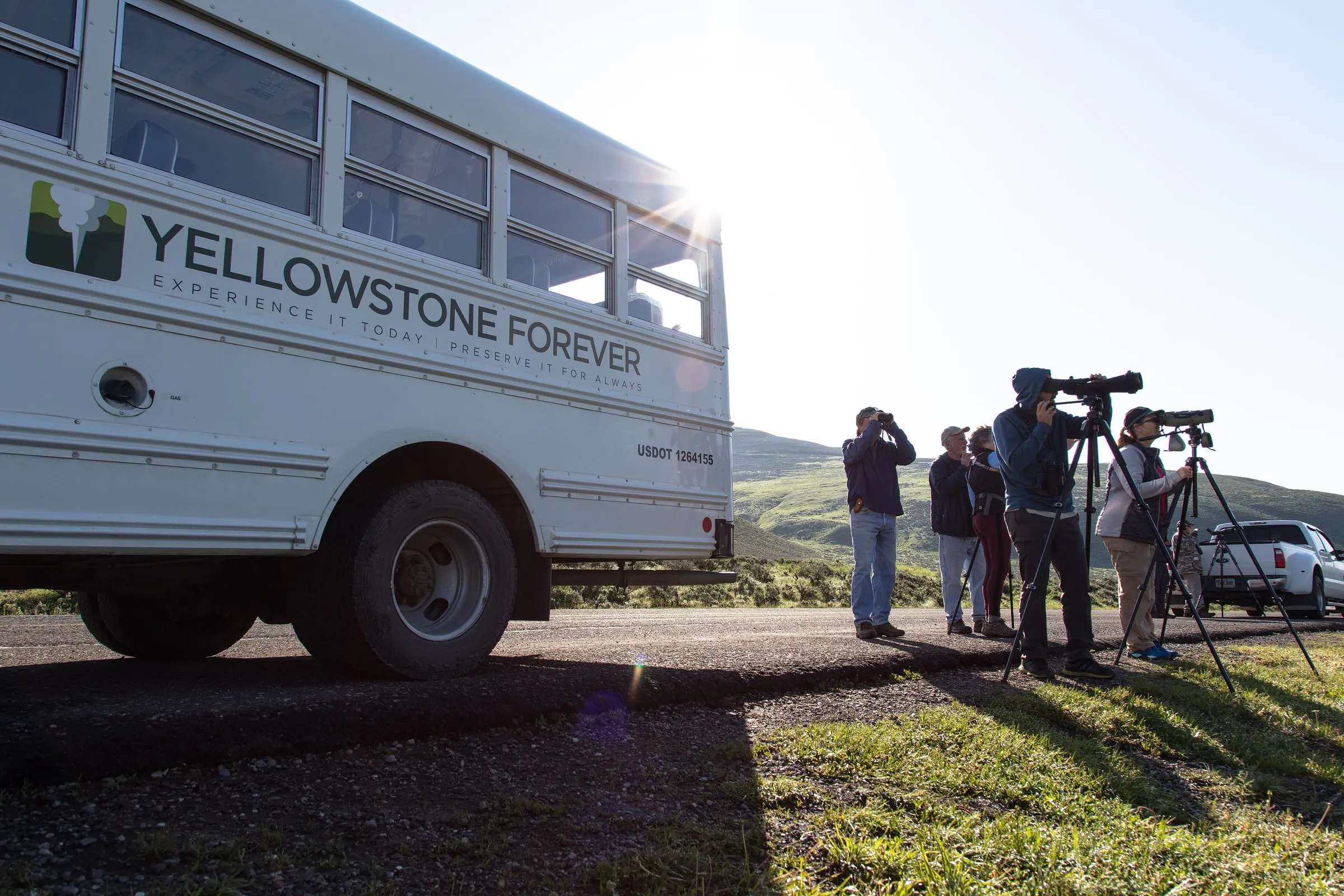
NPS / Jacob W. Frank · Public domain

Who answered

104 owners, operators and managers.

From Livingston, Paradise Valley, Gardiner and Cooke City/Silver Gate. The survey went to businesses that earn at least a fifth of their revenue from people who came to see the place.

gave a name (89) stayed anonymous (15)

Small shops, mostly

50% bring in under $100,000 a year from tourism. These are not resort chains. These are your neighbors.

  • $0–$100k50%
  • $100k–$250k20%
  • $250k–$500k7%
  • $500k–$1m5%
  • $1m+13%
  • No answer6%

What they do

Retail, outdoor outfitting, food services and accommodations made up 67% of the business types listed (businesses could list more than one). Forty-one respondents listed two or more types.

  • Retail50
  • Outdoor outfitters45
  • Food services22
  • Accommodations19
  • Business services15
  • Real estate and property12
  • Education and health10
  • Artists and performers9

The findings, one square at a time

Each square is one percent of the businesses that answered.

  1. Business outlook Q6

    75% are optimistic about their own business.

    Three out of four. Of the 104 owners, 14 were unsure and 9 said no. Business, by and large, is good.

    The marmots were not surveyed. They seemed fine.

  2. Nature outlook Q8

    75% have little or no optimism about how our natural resources are managed.

    The same owners, flipped. 51 said no and 28 were not sure. Optimistic about the till, worried about the land the till depends on.

    That gap is the whole reason we exist.

  3. Why customers come Q10

    90% say seeing wildlife is important to their customers.

    71% say very important. Not one business said it does not matter. Learning about nature came second, at 81%.

  4. The view Q9

    92% rate scenic resources as extremely or increasingly important.

    The top-rated natural resource of the twelve. Water and air were right behind it. We really do sell the view.

  5. Giving back Q13

    77% feel a personal responsibility to give back to the resource.

    12% said maybe. 7% said no. The yeses mostly give through advocacy and their own time, then a share of profits, and most do at least two.

  6. New money Q12

    74% agree we need to raise new revenue for wildlife, together.

    Private or public. Only 7% disagreed. Business owners asking how to pay more for wildlife: write that down.

  7. The bed tax Q12

    5% think bed tax dollars are being used well to protect natural resources.

    54% disagree. The rest are still looking for the receipt.

    Five. Not fifty. Five.

  8. The memo Q12

    73% say visitors and residents do not have a solid grasp of how to treat wildlife.

    Only 13% think the message has landed. Which is where businesses come in: we talk to more visitors than anyone.

Question 11 · The headliners

Who brings in the customers?

The carnivores got the most "very important" votes of anything we asked about. The grizzly would like that noted in its file.

Ungulates

bison, elk, bighorn sheep, pronghorn

63% very · 26% important · 0% not

Carnivores

grizzly bear, wolf, coyote, mountain lion

78% very · 9% important · 1% not

Birds of prey

eagles, falcons, hawks

45% very · 36% important · 1% not

Fish

trout, whitefish

45% very · 30% important · 4% not

Other wildlife

35% very · 36% important · 1% not

Other birds

songbirds, jays, corvids

20% very · 33% important · 11% not

Question 9 · Twelve natural resources

What our businesses can't do without.

Rated over the last five years. Sort it any way you like.

Sort by
  1. Scenic resources 2369 92%
  2. Water resources 72660 86%
  3. Respect for the resource 83155 86%
  4. Air quality 83451 85%
  5. Over-development 6112558 83%
  6. Science-based management 7112060 80%
  7. Ability to find solitude 113247 79%
  8. Adequate law enforcement 183044 74%
  9. Respect for fellow recreationists 1663143 74%
  10. Dark skies 91373536 71%
  11. Quality of the fishing 13212537 62%
  12. Quality of the hunting 211982824 52%
  • Not important
  • Neutral or no opinion
  • Somewhat important
  • Growing importance
  • Extremely important

Questions 7 and 17 · What keeps us up at night

It's not the bears.
It's the rent.

58% call employee housing a significant or growing problem. 70% have some concern about overcrowding and degraded access to the outdoors. When we asked what keeps owners up at night, here is what 88 of them said, by how often it came up:

  • Impacts from growth and development18
  • Affordability (housing, cost of living) and staffing14
  • Overcrowding: loving the resource to death11
  • Lack of trust in state wildlife management10
  • Loss of fish, wildlife and habitat8
  • Loss of community and rural character7
  • Water resources6
  • Hunting, trapping and public safety (bison, wolves)5
  • Misplaced need for profit and progress4
  • Lack of respect for land, bad behavior3
  • Need to give back and be good stewards3
  • Climate change and wildfire3
  • Lack of coordination and planning2
  • Infrastructure (roads and closures)2
  • Grizzly bear management2
  • Wildlife passage across roads2
  • Future insurance cost or availability2

Question 5 · What customers come to do

Wildlife first. Then boots, then rods.

Businesses picked every activity their customers come for; the number is how many businesses picked it.

Question 12 · Eight statements

Where we agree, and where we don't.

Tap a row for the exact wording.

  1. Gateway branding 8% 77% Strong accord

    "Building on a Yellowstone gateway community brand for responsible outdoor recreation activities and products will help protect and enhance the region's wildlife and natural resources."

    A brand for responsible recreation. Even the ravens are on board.

  2. New revenue for wildlife 7% 74% Overall consensus

    "We need to be more proactive on how to collaboratively raise new revenues (private or public) for wildlife."

    Translation: pass the hat, and put something in it ourselves.

  3. Recreation and community 10% 72% Overall accord

    "Increasing participation in outdoor recreation is good for the community and will also increase advocacy for conservation of the region's natural resources."

    More people outside means more people who care. Mostly.

  4. Working lands 10% 70% Overall consensus

    "Large private working lands (e.g., ranches) are extremely valuable for the future of wildlife in our region and we need to ensure they remain viable."

    Working ranches and wild elk, same valley, same neighbors. The elk would like that in writing.

  5. Recreation impacts 16% 63% General agreement

    "The natural resources of our region are threatened by existing outdoor recreational use and will only get worse."

    We love it here. Sometimes a little too hard.

  6. Marketing campaigns 22% 33% Mixed response

    "Existing marketing campaigns with regional chambers of commerce, tourism organizations, and economic development professionals are effectively promoting the region's outdoor recreation assets."

    A third say the marketing works. The bison remain unimpressed.

  7. Bed tax 54% 5% Overall disagreement

    "We are making effective use of bed tax dollars for protecting natural resources."

    Five percent. That is not a typo. Somewhere in Helena, a pothole is filing for retirement.

  8. Best practices 73% 13% Overall disagreement

    "Visitors and residents alike have a solid grasp on best practices for respecting wildlife and reducing their impact on natural resources."

    Seventy-three percent say visitors still need the memo. Please do not pet the fluffy cows.

DisagreeNeutral or no answerAgree

Question 14 · The third rail

A local sales tax for wildlife?

In Montana, sales tax talk usually ends the meeting. Not here. If at least some of the money went to protecting and improving natural resources:

Question 15 · Out of our own pockets

Would you put profits into a fund for nature?

  • Very interested14%
  • Tell me more39%
  • Would need convincing24%
  • Not interested12%
  • No answer11%

The middle of that chart is who we are talking to. Here is our pitch.

Question 16 · If you could change one thing

The one thing owners want done.

  1. Limit development25
  2. Concern for fish and wildlife23
  3. Overcrowding17
  4. FWP management12
  5. Lack of regulation of development7
  6. Housing and labor6
  7. Water6
  8. Politics managing wildlife6
  9. Loss of community5

Spend it with the herd

Be a regular at the places that look after this one.

These owners want to invest in the wild. Your money is how they do it. Pick the places that signed the pledge, and tell them why.

How we did it

By businesses, for businesses.

Initiated by Wild Livelihoods with the financial support of the Spruance Foundation II and the technical and administrative support of the Property and Environment Research Center (PERC).

We built a list of 872 businesses across Livingston, Paradise Valley, Gardiner, Cooke City/Silver Gate, from the chambers of commerce and our own membership, and sent the survey out starting in May 2024. It took 12 to 15 minutes. Volunteers walked it door to door in Livingston and Gardiner. 104 owners answered as of January 22, 2025. We shared the results in person in Gardiner (April 3), Livingston (May 23), Cooke City (May 28).

Answers were voluntary and confidential. Nobody is quoted by name. Opinions showed little connection to age, education or gender, so please do not assume.

Report team

Whitney Tilt, Paradise Valley Coordinator for PERC, and Jeff Reed, Evan Stout and Rhiana Peck, businesspeople and members of Wild Livelihoods.

Download "Sustaining Paradise" (PDF)

Join up

Two ways in. Pick your trail.

Passing through? Sign the register and we will tell you when the good stuff happens. Run a business here? Sign the pledge, and stand up in the directory for every visitor to see.